A Good Show
by Tim Love
People always said I have a lovely voice, that I could read out a phone directory and make it sound interesting. Trouble is, they don’t make directories anymore. I miss the feel of paper. Maybe that’s why I still buy the local rag. Today over breakfast, while doing the crossword, I noticed that my horoscope says I’m going to fall in love. I’d like to play safe and stay in, but I’ve a busy day ahead.
I once thought I could make it in acting. I should have auditioned for character parts rather than leads—I never had the charisma. I’m a voice artist now—audio books and the odd radio ad. As a sideline I entertain at kids parties. I’ve done magic tricks since I was a kid, impressing parents and girlfriends. It’s a way to keep in touch with people. Here’s a tip: If you want to perform magic, an audience of five-year-olds is best. Younger, and they won’t be amazed—the whole world is magic for them. Too old and they won’t believe in magic—they’ll ask how the tricks are done, looking them up on their phones during the performance. This afternoon I’m performing at Katy and Luke’s house for their kid’s fifth birthday party. I went out with Katy once. We didn’t click. Maybe that’s why we’ve stayed friends.
I give up the cryptic crossword with only five clues done—I’m getting worse—and look around for something easier on the page. The horoscope catches my eye again. If you’re into love rather than magic, I reckon the best target audience is fourteen-year-olds. I remember when I was fourteen how I used to fall in love so easily—“falling” is exactly how it felt, as if I was letting go, free at last. By the time I was sixteen I knew all the tricks and didn’t fall for them. I had a group of friends, and every few months we’d shuffle around. Gradually, couples left to start families, and the group fell apart. I fell apart.
* * *
When my act’s over I head for the kitchen as parents arrive to collect their darlings—I’m desperate for a drink. In each party bag there’s a piece of paper with instructions showing how to make it into a bird—origami was a theme of my show, birds appearing out of nowhere. A pile of the multicolored sheets is on the table. A woman arrives. I recognize her—Katy’s older sister Rose. I used to fancy her at school. She was never part of our little gang. Kate hardly mentions her. I’ve heard that she’s a widow—her much-older husband had a heart attack jogging.
“Hi,” she says, “I’ve come to clear up the rubbish. You’re the magician, right?” She picks up a sheet of paper and studies it.
“Yeah. I remember you from school,” I say, “You’re Rose.”
“I don’t remember you,” she says, starting to fold the paper.
“I was in Katy’s year. Kids always remember the old kids, not the ones in lower years. Sorry, I didn’t mean . . . ”
“No, no, it’s ok,” she says, not looking up, “I haven’t got my free bus pass yet.”
“Anyway,” I say, “I’m Mike. I haven’t seen you around recently.”
“I’ve been living in London. Funny, when I was little all I wanted to do was get away from this dump. Now here I am again.”
I open the fridge.
“Hungry?” she says.
“Looking for a beer actually. It’s hard work doing magic.”
“Doing anything later?” she says. “After I’ve scraped all the jelly and puke off the floor I could do with a drink, too.”
“I’ve got to take my props home,” I say, squaring up the pile, “Maybe we could meet up later.”
* * *
At 7:00 I’m in the Barley Mow—my suggestion. The surprise at meeting Rose has turned to excitement. Maybe widows are the next-best thing after fourteen-year-olds— they haven’t lost hope that magic is possible, they still want to believe. It’s years since I’ve been here. I used to come every Friday with the gang. We gave updates on work and love, planning the weekend and our holidays. The numbers dwindled until only a few of us were left. One night it was only me. That was the trigger, the final straw. I didn’t leave the house for a week. Nobody checked to see if I was OK. Nobody cared. Nobody believed in me. I didn’t believe in myself.
Opposite me is an old guy with a scarf, working his way slowly through a pint as he reads the paper. That’s who I could have been. Everyone would know my favorite table and leave it empty for me. The barmaid would bring me my usual. I would go home and watch Celebs Go Dating repeats with a few nightcaps. But I’ve avoided all that. I’ve avoided everything.
She hasn’t turned up. At 7:30 I just slip away.
* * *
This is my special place, on the edge of town. I always feel better after coming here. It’s not an official country path—there are no signposts. It cuts across fields and a wood. There are little wooden bridges over a stream. I know where the primroses are in spring, and the blackberries in summer. The air suddenly turns cold; the birds fall silent. I sit against a trunk and hug myself, listening to the wind in the trees. There’s a patter of rain, then a downpour. I’m safe and dry. I see Rose in a clearing. Has she been there all the time? I thought I was the only person who knew about this place. Did she follow me? She spreads her arms to welcome the rain. I don’t want to disturb her—I wouldn’t want to be disturbed. When the rain stops and there’s just the dripping from the trees I call her, tell her not to be afraid. We walk back toward town. Once she starts talking she can’t stop.
“Sorry,” she says, “I have episodes like this. It seemed such a nice evening, shame to waste it in a pub, so I came here, my special place, away from that bloody nephew of mine. I’ve always wanted kids. My husband was getting himself fit so we could have more sex but he had a heart attack.”
“That’s sad,” I say.
“Did you follow me? My family don’t talk about my problems. When the rain spoke to me in the clearing, I thought it was a voice-over in a film. I knew someone was watching me. Then I thought I was in The Matrix—it’s happened to me before. But I was getting soaked, so I knew it was real. Then I remembered the drone displays that they put on instead of fireworks. I thought that maybe each drop was a tiny, glittering drone. How long did I stand there?”
“I don’t know,” I say. I don’t know what the rain said to her. But I know that it’s dark now. Hundreds of pale drones light the sky. They’re so far away that they could be talking to anybody. Even me. “I understand,” I say, “It’s hard being alone. I talk to myself for hours.” I don’t tell her it’s my job. We’re back on the street now. I turn one way, and she starts turning the other.
“I’m staying at Katy’s tonight,” she says.
“Admit it,” I say, “I fooled you for a while.”
“I didn’t see your act. What did you think of mine, before the rain?” she asks.
“It’s good. You haven’t changed,” I say, “not really.”
“Those paper birds of yours,” she says, “are they supposed to fly?”
“No, but you can flap their wings.”
“I picked a yellow one,” she says, “I should have picked blue.”
“Why blue?” I ask.
“Because if it flew away I wouldn’t notice. It’s the color of the sky. You’ve got a lovely voice. What’s your name again?” she asks.
“It’s on the sheets,” I say, “My number’s there, too.”
When I get home I throw the newspaper away. We have the same special place. I suppose that’s a start. I get some cans from the fridge and fall asleep watching TV.
She never phoned. I never went to the wood again. I stopped watching Celebs Go Dating when I found out it was scripted. I still do magic.
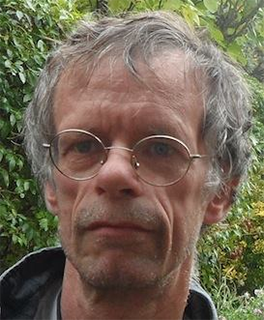
Tim Love’s publications are a poetry pamphlet, Moving Parts (HappenStance), and a story collection, By all means (Nine Arches Press). He lives in Cambridge, UK. His poetry and prose have appeared in Stand, Rialto, Magma, The Forge, The Cortland Review, etc. He blogs at litrefs.blogspot.com/
Bsky: @TimLoveWriter
Facebook: www.facebook.com/tim.love.315